

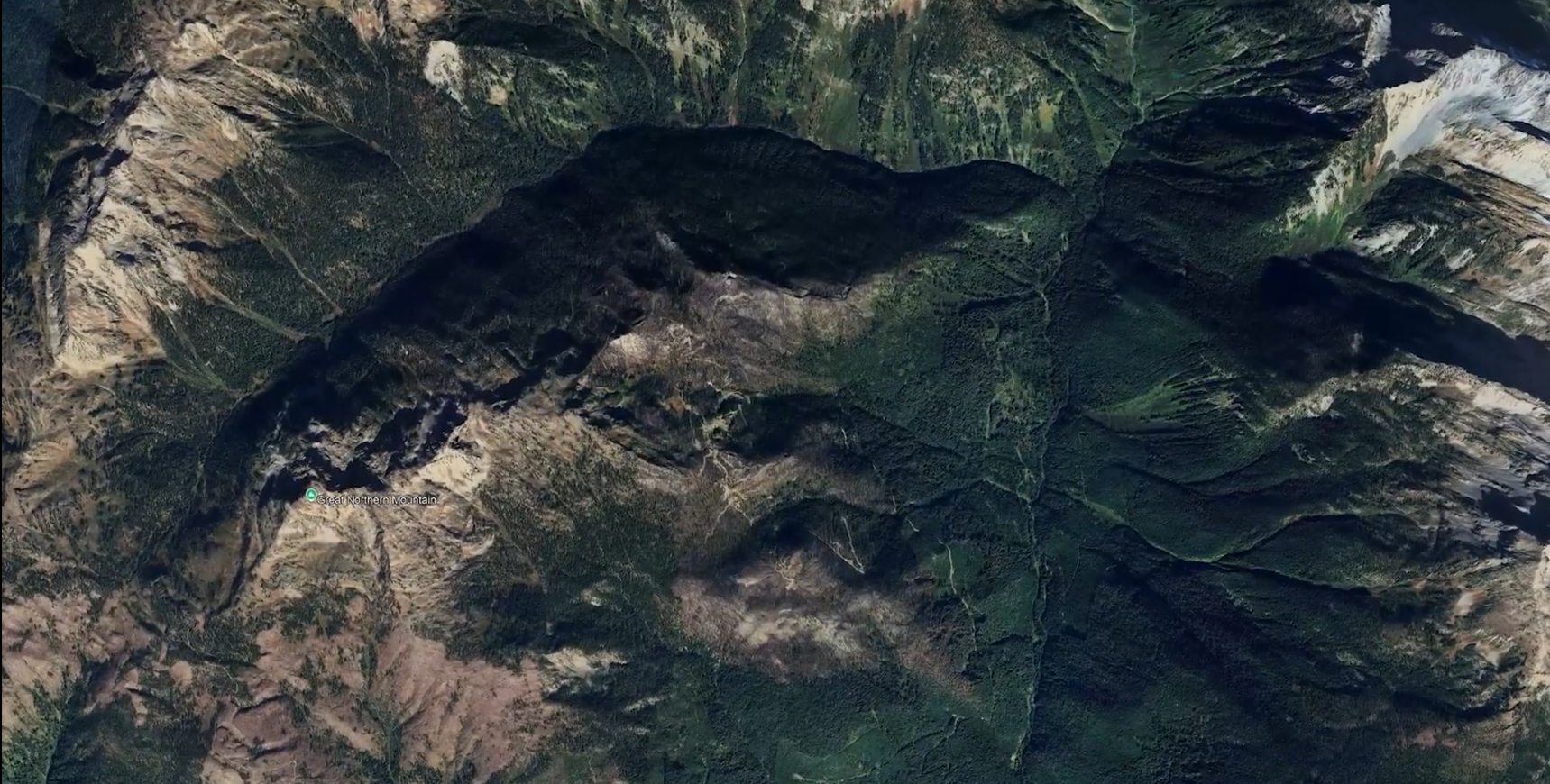
Thor Mineral Resource · Southeastern British Columbia
A defined, independently prepared NI 43-101 Mineral Resource supports the Thor investment thesis while Taranis tests the broader Silver Cup mineral system.
The core technical foundation
Thor has been delineated through 271 modern diamond drill holes totaling 19,750 metres, supported by underground channel sampling, trenching and modern topographic control.
The independent April 2024 update incorporated airborne LiDAR and 119 drill holes completed after the maiden 2013 estimate. The result was a reported 78% increase in Indicated resources and a 41% increase in Inferred resources.
The Mineral Resource provides a defined asset base. The surrounding district-scale targets represent separate exploration opportunities and are not included in the Mineral Resource unless expressly stated.
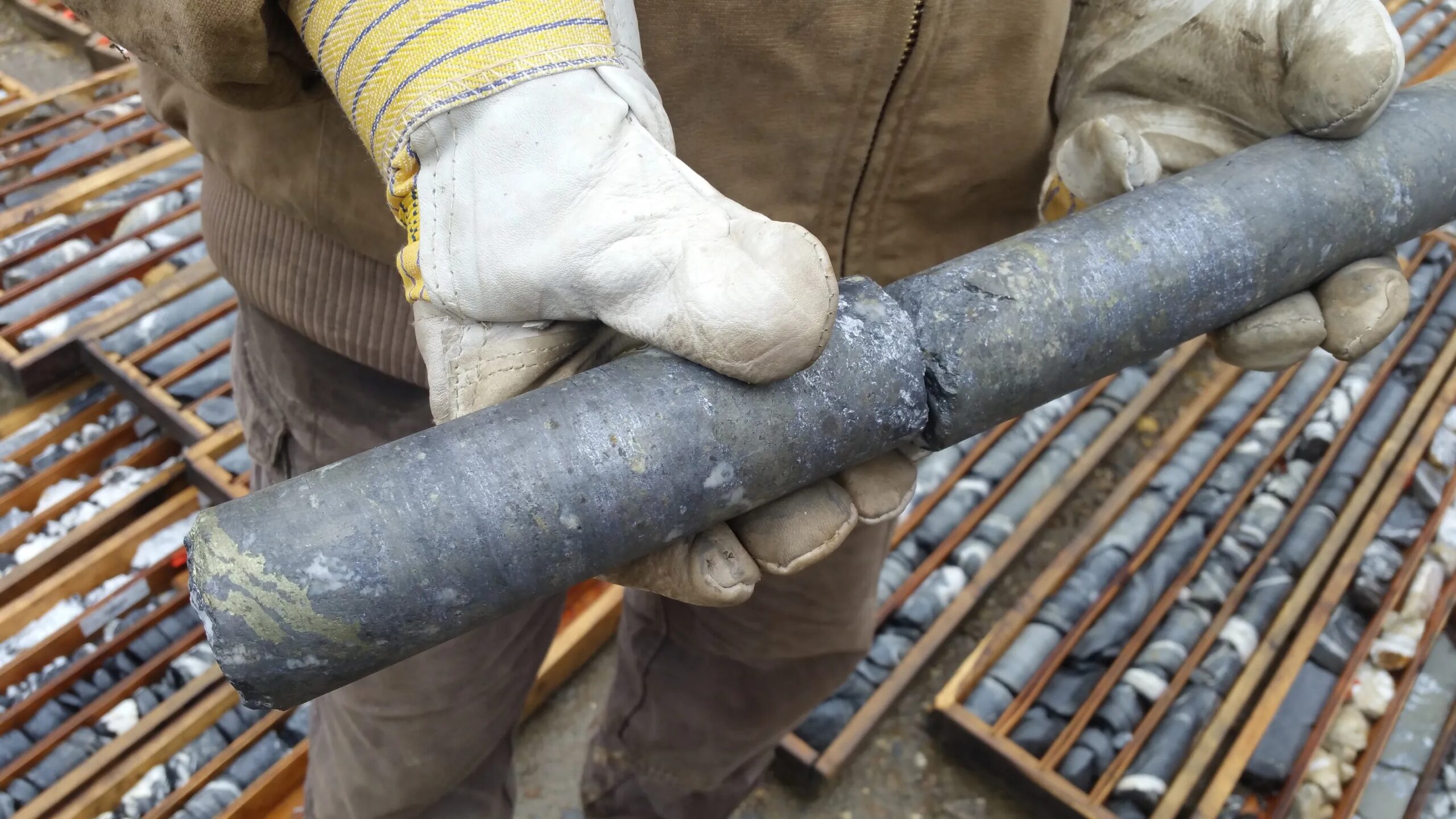
NI 43-101 compliant estimate
Effective February 26, 2024 and prepared by P&E Mining Consultants Inc. Pit-constrained resources use a C$40/t NSR cut-off; out-of-pit resources use a C$120/t NSR cut-off.
| Resource area | Classification | Tonnes kt |
Au g/t |
Ag g/t |
Cu % |
Pb % |
Zn % |
Au koz |
Ag koz |
Cu Mlb |
Pb Mlb |
Zn Mlb |
|---|---|---|---|---|---|---|---|---|---|---|---|---|
| Pit-constrained | Indicated | 1,037 | 0.75 | 160 | 0.13 | 2.01 | 3.03 | 25.1 | 5,328 | 3.0 | 45.9 | 69.4 |
| Inferred | 339 | 0.80 | 154 | 0.16 | 1.95 | 2.81 | 8.8 | 1,679 | 1.2 | 14.6 | 21.0 | |
| Out-of-pit | Indicated | 102 | 0.70 | 76 | 0.07 | 0.84 | 3.79 | 2.3 | 248 | 0.2 | 1.9 | 8.5 |
| Inferred | 260 | 0.48 | 70 | 0.14 | 1.09 | 3.92 | 4.0 | 584 | 0.8 | 6.3 | 22.5 | |
| Consolidated | Total Indicated | 1,139 | 0.75 | 152 | 0.12 | 1.90 | 3.10 | 27.4 | 5,575 | 3.1 | 47.8 | 77.9 |
| Consolidated | Total Inferred | 599 | 0.66 | 117 | 0.15 | 1.58 | 3.29 | 12.8 | 2,263 | 2.0 | 20.9 | 43.5 |
Reported in accordance with the 2014 CIM Definition Standards and Canadian National Instrument 43-101.
Au US$1,900/oz; Ag US$23/oz; Cu US$4.00/lb; Pb US$1.00/lb; Zn US$1.40/lb.
A constant exchange rate of US$0.75 to C$1.00 was applied.
C$40/t pit-constrained and C$120/t out-of-pit NSR cut-offs reflect stated mining, processing and G&A assumptions.
Open-pit resources are constrained within optimized pit shells using 50-degree pit slopes.
Au 90%; Ag 90%; Cu 85%; Pb 90%; and Zn 90% for the base-case estimate.
Regulatory note: Mineral resources are not mineral reserves and do not have demonstrated economic viability. Inferred Mineral Resources have a lower level of geological confidence than Indicated Mineral Resources.
Commodity breakdown
Thor combines precious-metal value with zinc, lead and copper credits, creating a more diversified commodity profile than a single-metal deposit.
The project materials also report antimony, indium, cadmium and gallium occurrences. These specialty metals are not included as separate payable commodities in the MRE table below.
Silver and gold represent the majority of the illustrative NSR commodity contribution.
Zinc, lead and copper provide additional value exposure alongside reported specialty-metal occurrences.
Zinc sensitivity
The base-case MRE applies US$1.40/lb zinc. A simple contained-metal sensitivity at US$1.70/lb illustrates an incremental gross in-situ zinc value of approximately US$36.42 million. This is not a project valuation, revenue forecast or economic analysis.
Geological domains
Modern drilling and modelling connect the historic mine areas along a continuous 2.8-kilometre epithermal system hosted by the Thor Fault Zone.
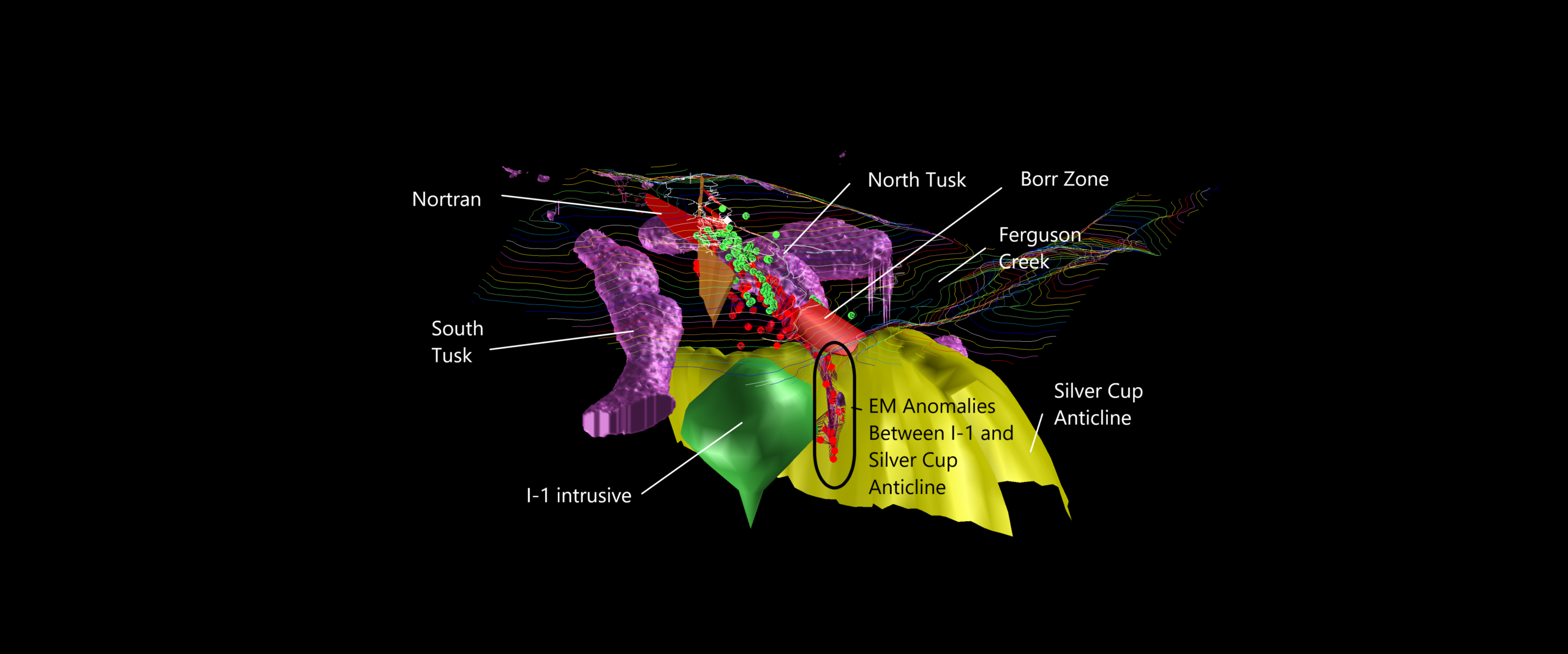
Expand geological model
The structural breakthrough
Historic operators treated Broadview, Great Northern, True Fissure, Blue Bell and St. Elmo as separate narrow-vein mines. Between 1898 and 1944, these workings collectively shipped 4,931 tonnes of hand-sorted ore containing approximately 1.7 million ounces of silver and 7.8 thousand ounces of gold.
After consolidating the claims, Taranis applied drilling, mapping and geophysics to interpret the historic workings as structural panels within a single intermediate-sulfidation epithermal system.
A regional shear structure dipping approximately 45 degrees east-northeast and obliquely crosscutting the Silver Cup Anticline.
The principal pit-constrained resource is highly continuous, generally one to five metres thick and occurs at or near surface.
The system remains open northwest toward Thunder and down-dip to the east. These extensions require additional drilling.
Metallurgical de-risking
A permitted 10,000-tonne bulk-sample program is designed to generate practical process data beyond localized bench-scale testing.
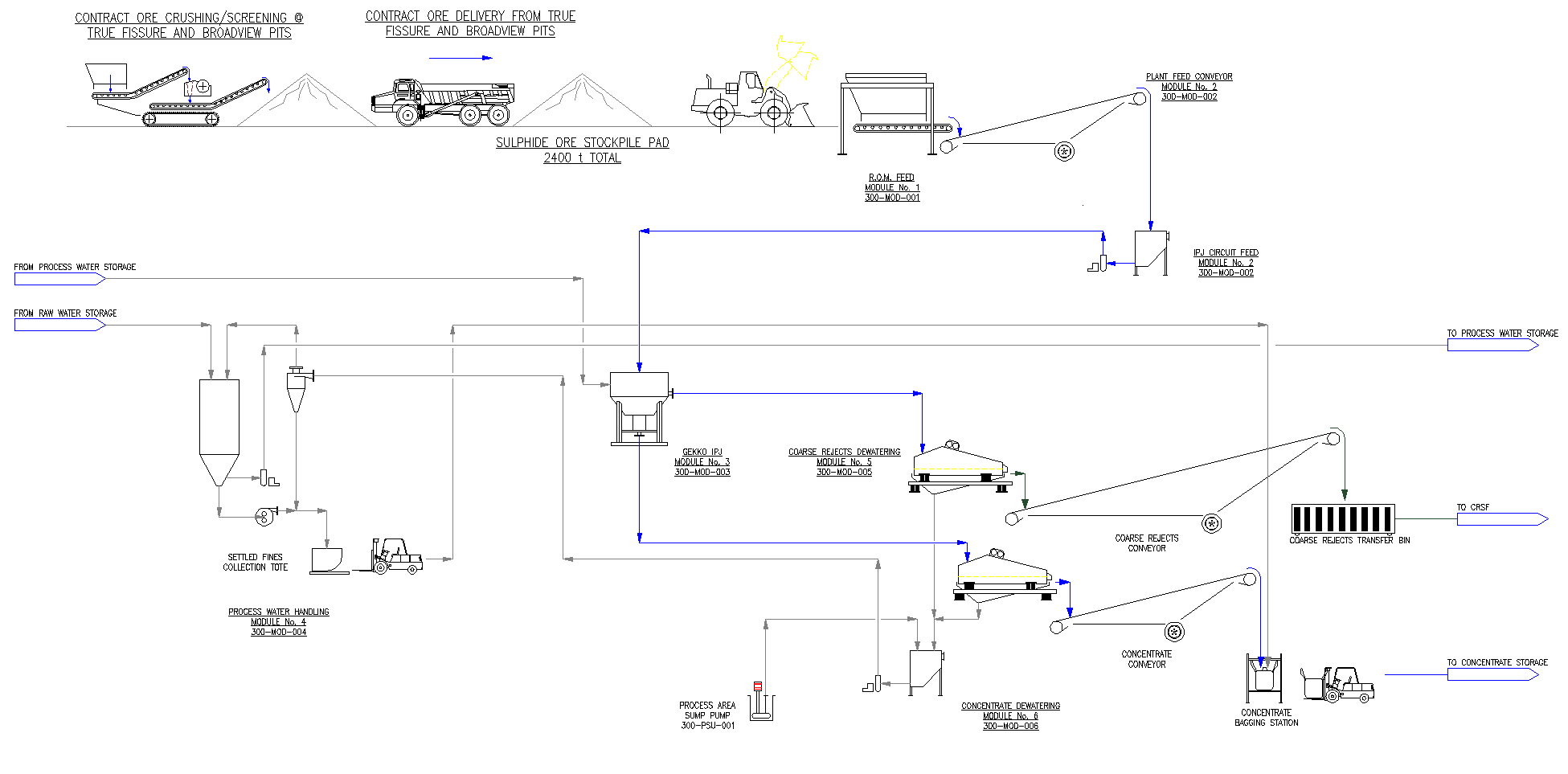
Expand process flow
A modular plant designed with Gekko Systems and Novus Engineering concentrates material close to the mine site.
In-Line Pressure Jigs separate dense sulfide minerals from lighter metasedimentary host rock using gravity.
Rejecting barren rock before transport has the potential to reduce downstream hauling, crushing and handling requirements.
Bulk-sample results are intended to improve recovery, concentrate-quality and payable assumptions for future technical studies.
Development-stage note: The process concept and bulk-sample program do not establish economic viability. Any future PEA or pre-feasibility study remains subject to results, financing, permitting and Qualified Person review.
Technical downloads
Review the independent estimate, engineering documentation and regulatory disclosure behind the Thor Mineral Resource.
Qualified Person
Exploration activities and technical database compilation at the Thor Project are overseen by John J. Gardiner, P.Geo., President and CEO of Taranis Resources Inc., a Qualified Person under Canadian National Instrument 43-101.
William Stone, Ph.D., P.Geo.; Fred H. Brown, P.Geo.; Jarita Barry, P.Geo.; D. Grant Feasby, P.Eng.; and Eugene Puritch, P.Eng. — P&E Mining Consultants Inc., Report No. 453.
Mineral resources that are not mineral reserves do not have demonstrated economic viability. Inferred Mineral Resources are considered too speculative geologically for economic considerations to be applied that would enable them to be categorized as Mineral Reserves, and there is no certainty that further drilling will convert them to Indicated or Measured categories.